


Varicocele symptoms are not always noticeable, and many men may discover they have a varicocele during a fertility evaluation or routine physical examination. When symptoms do appear, they can range from a mild ache or feeling of heaviness to visibly enlarged veins — many men find out they have one only during a fertility work-up or a routine physical exam. When symptoms do appear, they can range from a mild ache to a visibly enlarged bundle of veins.Varicocele is one of the more common conditions seen in men, especially between the ages of 15 and 35, and it is also one of the most treatable causes of male infertility. Doctors classify varicocele into grades based on its size and how easily it can be detected, which plays a role in deciding whether treatment is necessary. In this blog, we'll walk through the symptoms, the underlying causes, how it's diagnosed, what each grade means, and the treatment options available.

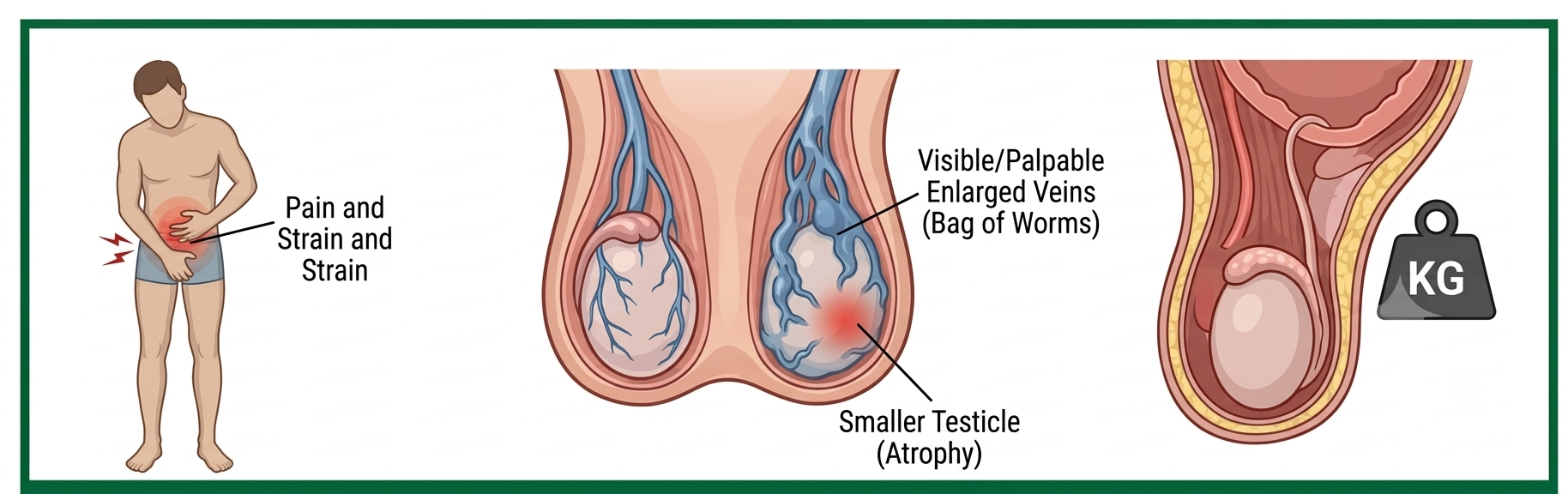
Common varicocele symptoms can range from mild discomfort and heaviness to visibly enlarged veins around the scrotum.
• A dull, aching pain that worsens with standing or physical activity
• A feeling of heaviness in the scrotum
• Visible or palpable enlarged veins, often described as feeling like a "bag of worms"
• One testicle appearing smaller than the other over time• In many cases, no symptoms at all

• Malfunctioning valves inside the testicular veins
• Anatomical differences that make the left side more prone to it
• Increased venous pressure from prolonged standing or heavy lifting
• Rarely, a blockage affecting normal blood flow
• Faulty valves inside the testicular veins.
• Anatomical differences, especially on the left side.
• Increased pressure in the veins from prolonged standing or heavy lifting.
• Rarely, a blockage that affects normal blood flow
If varicocele symptoms are present, a doctor may perform a physical examination and recommend further tests when needed. Comprehensive Diagnosis and Evaluation of Varicocele
Initial Physical Examination: Varicocele diagnosis typically begins with a straightforward physical examination performed by a physician.
Standing and Lying Evaluations: During this check, the doctor examines the scrotum while the patient is both standing up and lying down to assess changes in vein prominence.
The Valsalva Maneuver: The physician may ask the patient to strain—known as the Valsalva maneuver—which increases intra-abdominal pressure and makes the enlarged veins more prominent and easier to detect.
Scrotal Ultrasound with Doppler Imaging: If the physical findings are inconclusive or if male fertility is a primary concern, a scrotal ultrasound utilizing Doppler imaging is frequently ordered. This specialized imaging confirms the diagnosis and accurately measures the size and blood flow of the affected veins.
Semen Analysis: When a varicocele and potential infertility are suspected to occur together, a semen analysis is often recommended to evaluate sperm count, motility, and overall quality.
Classification and Grading: Following the diagnostic examination, physicians typically grade the varicocele from Grade 1 to Grade 3 based on its size and how easily it can be detected during the physical exam or ultrasound evaluation.
Why Early Detection Matters: Identifying a varicocele early is critical because prolonged venous pooling can gradually raise scrotal temperature, potentially impacting testicular tissue health and sperm production over time.
Role of Follow-Up Testing: In cases where treatment is not immediately necessary—such as with smaller, asymptomatic varicoceles—urologists often recommend periodic monitoring and follow-up ultrasounds to track any changes in testicle size or vein dilation.
Discussing Treatment Options: Once the diagnosis is confirmed and the grade is established, doctors discuss potential interventions (such as microsurgical varicocelectomy or catheter embolization) if pain is severe, testicular atrophy is present, or fertility is actively being planned.

Grade 1
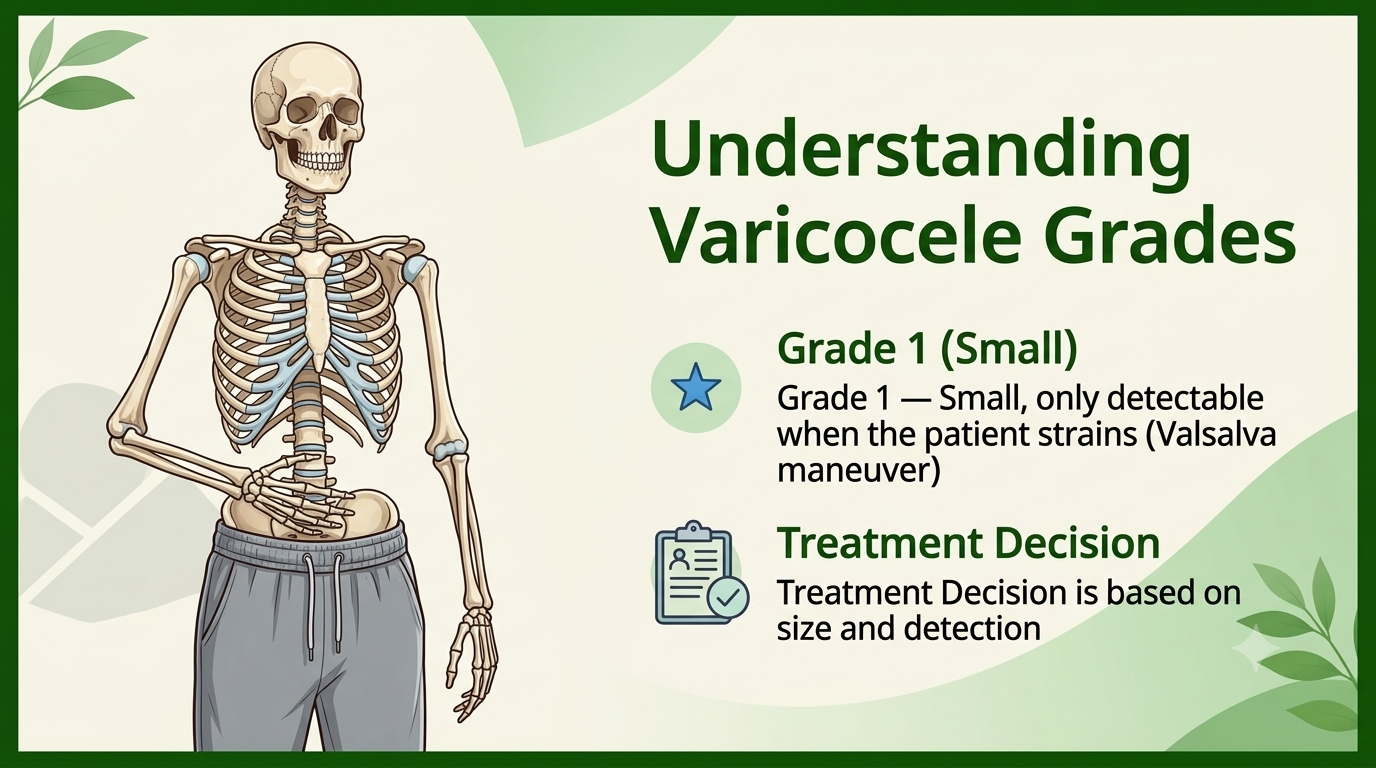
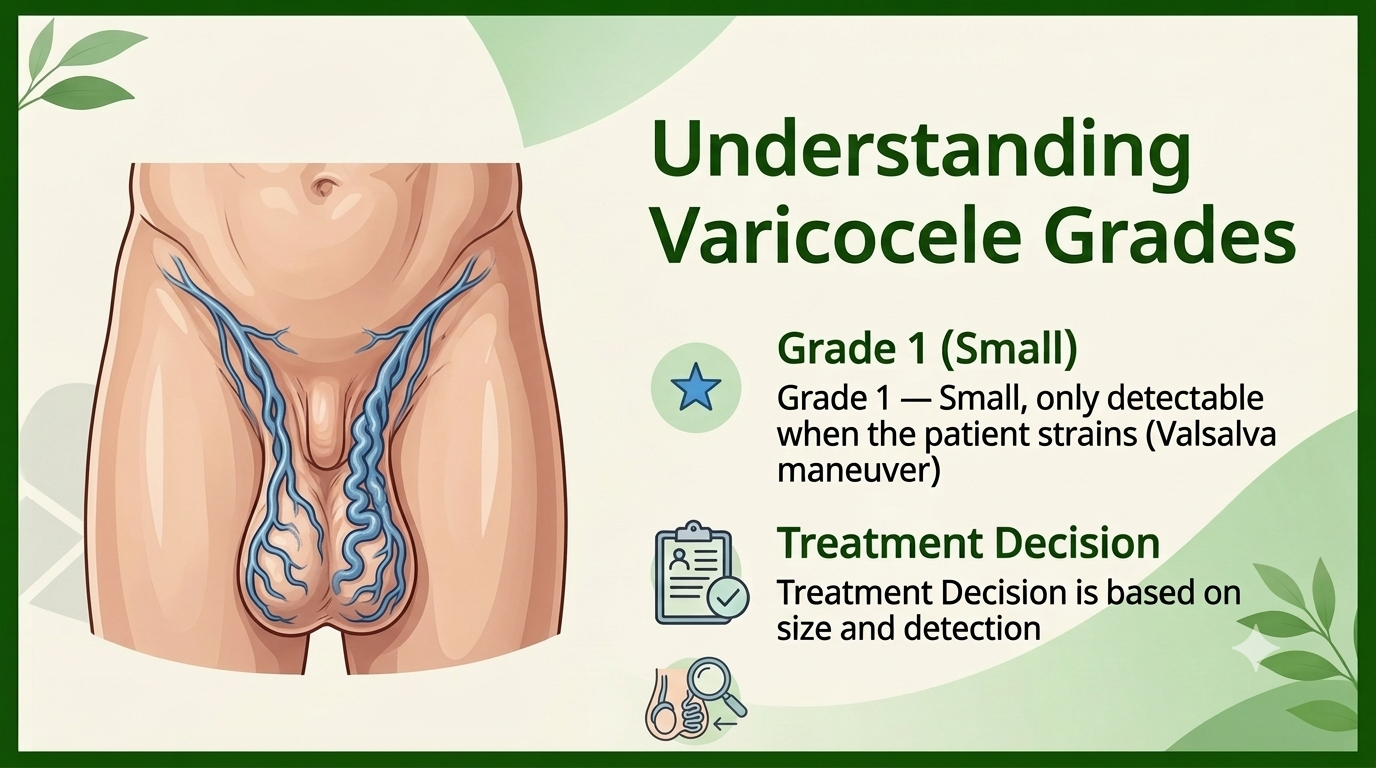
varicoceles are usually small and may not cause noticeable symptoms. They are often detected only during a physical examination when the doctor asks the patient to perform a straining maneuver. If there is no significant pain, testicular size reduction, or fertility concern, doctors may recommend regular monitoring rather than immediate treatment.
Grade 2
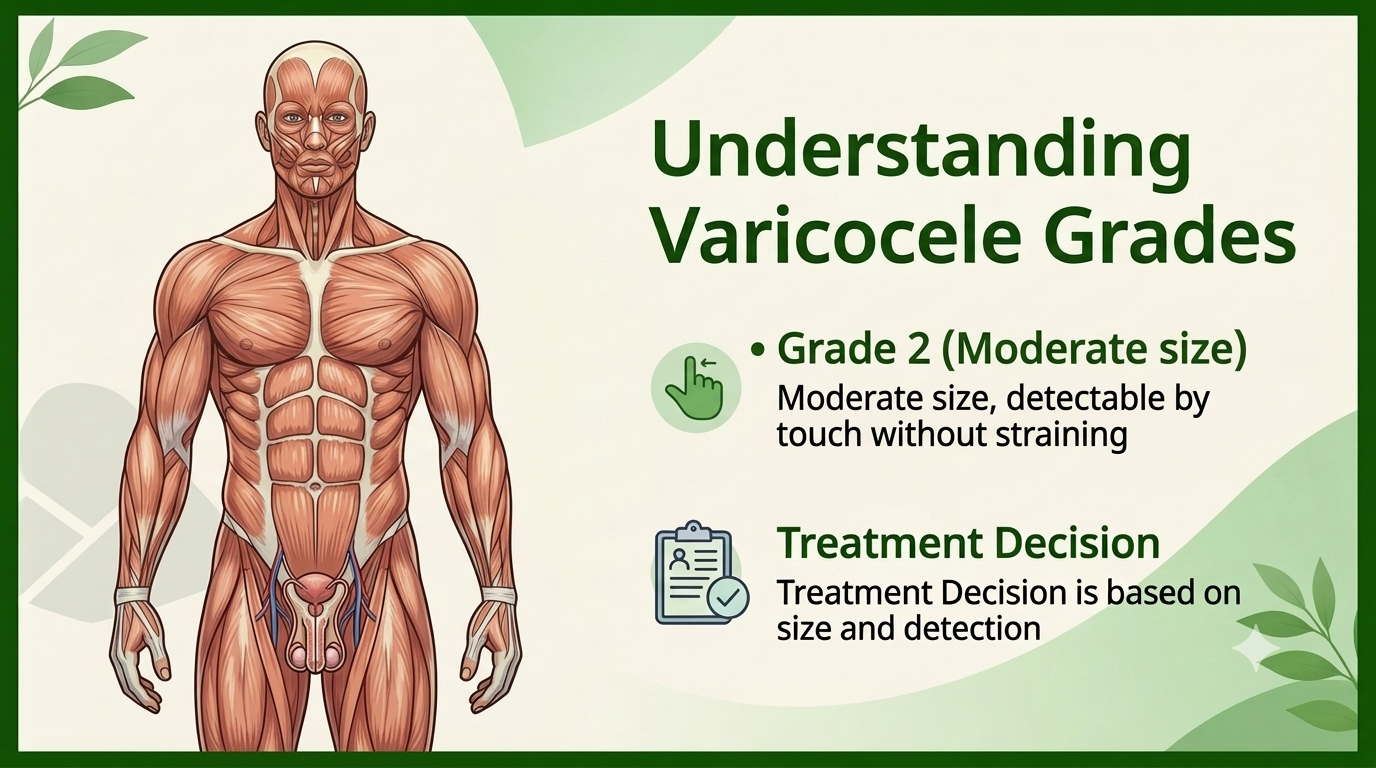
varicoceles are more noticeable during a physical examination and may be associated with symptoms such as a dull ache, heaviness, or discomfort, especially after prolonged standing or physical activity. Depending on symptoms, testicular changes, and fertility concerns, a doctor may recommend monitoring, further evaluation, or treatment.
Grade 3
varicoceles are the most visibly noticeable grade and can often be seen or easily felt without special examination techniques. They may be associated with discomfort, testicular size changes, or fertility-related concerns. A doctor will evaluate the severity, symptoms, testicular health, and semen analysis results before deciding whether treatment is appropriate.
Treatment depends on the grade, symptoms, and whether fertility is a concern. Common approaches include:
• Watchful waiting — regular monitoring for mild, symptom-free cases
• Pain relief measures — supportive underwear, cold compresses, and anti-inflammatory medication for mild discomfort
• Varicocelectomy — a surgical procedure to tie off the affected veins, commonly recommended for pain or infertility linked to a varicocele
• Percutaneous embolization — a minimally invasive, catheter-based alternative to surgery
• Lifestyle adjustments — avoiding prolonged standing or heavy lifting where possibleVaricocele surgery has a good success rate for improving sperm quality and relieving pain, though not everyone needs it — many men with a small, symptom-free varicocele never require treatment at all.
One of the biggest concerns men have is whether varicocele affects fertility permanently. A varicocele can raise the temperature around the testicle and reduce sperm quality over time, which is why it's considered one of the most common correctable causes of male infertility. However, the impact varies from person to person — many men with a varicocele father children without any issues, while others may see improvement in sperm count and motility after treatment. If you and your partner are trying to conceive and a varicocele has been diagnosed, a fertility specialist can guide whether intervention is needed.
Recognizing varicocele symptoms early and understanding its causes, diagnosis, and grading system can help you have a more informed conversation with your doctor.